Author: fci.admin
Riyadh Cement Company
Introduction
When Strategy Meets the Shop Floor
The cement industry stands at a critical inflection point. Facing simultaneous pressure from carbon regulation, energy cost volatility, and the global push toward net-zero industrial production, cement manufacturers can no longer afford to treat sustainability and operational performance as separate agendas. Riyadh Cement Company has chosen to treat them as one.
What makes Riyadh Cement’s story compelling is not any single initiative. It is the coherence of the transformation: a company that has systematically aligned digital capability, energy strategy, and environmental ambition into a single operating model. The result is one of the most instructive examples of industrial transition currently underway in the Kingdom of Saudi Arabia, and one that carries clear lessons for the broader regional cement sector.
The Strategic Logic
Vision 2030 as an Operating Framework
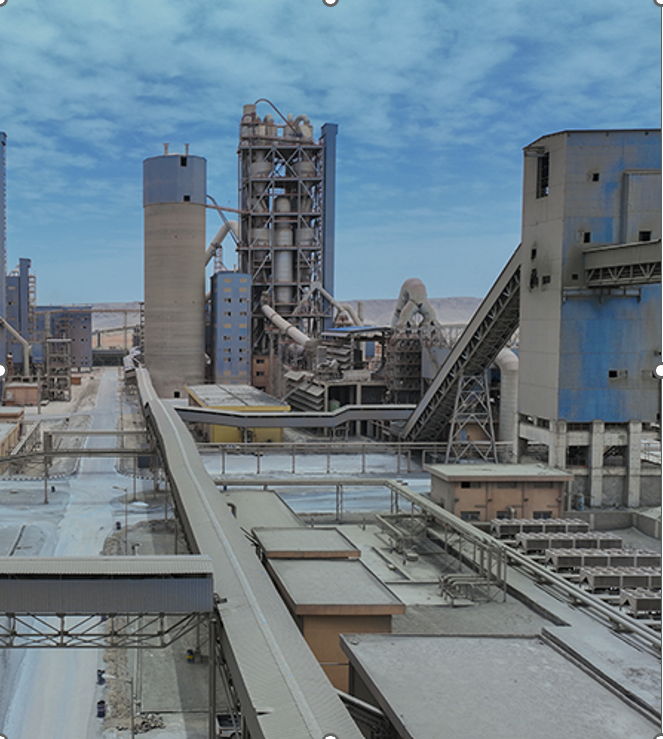
Riyadh Cement’s transformation did not emerge in isolation. It is explicitly anchored to Saudi Arabia’s Vision 2030 and the Fourth Industrial Revolution agenda advanced by the Ministry of Industry and Mineral Resources. This alignment is more than rhetorical. It reflects a deliberate decision to use national industrial policy as a forcing function for internal change, translating top-level targets into plant-level action.
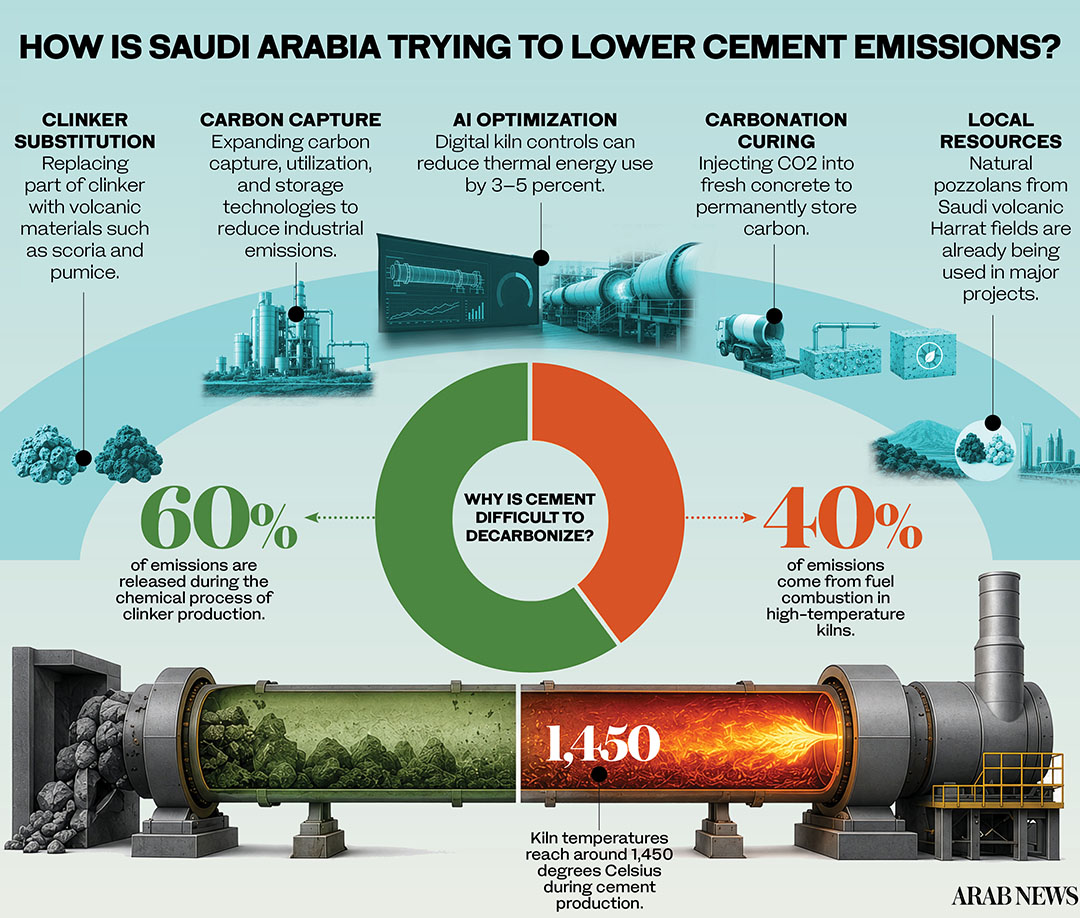
The company’s strategy sits at the intersection of three converging priorities: reducing the carbon intensity of production, improving energy efficiency across the full operational footprint, and deploying digital intelligence to drive continuous improvement. Each of these priorities reinforces the others. Energy efficiency gains reduce emissions. Digital systems surface efficiency opportunities that would otherwise remain invisible. Carbon reduction targets, in turn, create the organizational mandate to pursue both.
This integrated logic is what distinguishes Riyadh Cement’s approach from piecemeal sustainability efforts common elsewhere in the industry.
Digital Transformation
Building the Intelligence Layer
At the core of Riyadh Cement’s operational upgrade is a comprehensive digital transformation roadmap built on Industry 4.0 principles. The company has moved deliberately from reactive operations toward a data-driven production environment, where decisions are informed by real-time analytics rather than historical patterns and manual judgment.
The centerpiece of this shift is the deployment of smart control systems and industrial sensors throughout the production process. These systems generate continuous data streams that feed into predictive analytics platforms, enabling the maintenance and operations teams to anticipate equipment behavior rather than respond to failures after the fact.
The predictive maintenance program is particularly significant. By analyzing historical equipment data alongside live sensor readings, the system identifies degradation patterns before they translate into unplanned stoppages. This capability directly addresses one of the most persistent cost and productivity challenges in cement manufacturing: the unpredictable downtime that erodes both output volume and equipment lifespan. The measurable outcome is a reduction in unplanned stoppages and a meaningful improvement in overall equipment readiness across the plant.
Underpinning all of this is a data infrastructure designed for scale. Riyadh Cement has built the connectivity and data management architecture required to sustain continuous improvement, not just capture one-time gains.
Energy and Emissions
Moving the Needle on What Matters
The energy performance results delivered through this transformation are specific and substantial. Thermal energy consumption for clinker production has been reduced from 790 kilocalories per kilogram of clinker to 755 kilocalories per kilogram, a reduction that directly lowers the carbon intensity of the most energy-intensive stage of cement manufacturing. Electrical energy consumption for cement production has come down from 120 kilowatt-hours per ton to 107 kilowatt-hours per ton.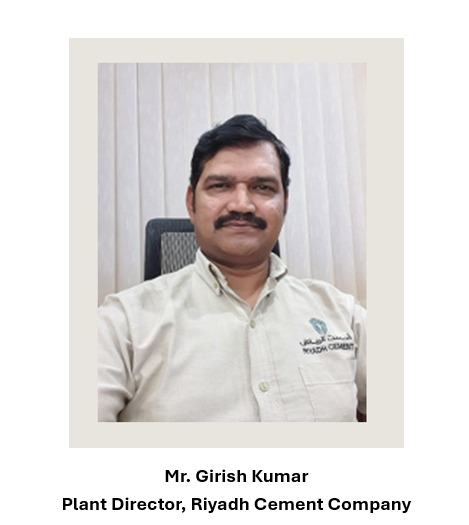
These are not marginal improvements. Across a facility operating at industrial scale, they represent a structural shift in the cost and emissions profile of the plant.
The flagship project enabling part of this performance is the Waste Heat Recovery (WHR) system, with a generation capacity of 12.6 megawatts. By capturing heat energy that would otherwise be lost through the production process and converting it into usable electricity, Riyadh Cement has created an internal generation asset that reduces dependence on grid power and improves the overall energy balance of the facility. The WHR system is a concrete demonstration of the principle that waste streams, when properly engineered, become productive inputs.
Complementing the WHR investment is a broader program of energy system upgrades across the plant, including the modernization of motors, drives, and auxiliary systems that collectively account for a significant share of total electrical consumption.
The combined effect of these initiatives has contributed to a roughly 20 percent increase in the productive capacity of kilns and cement mills, demonstrating that energy efficiency and output growth are not in tension. They are, when properly managed, mutually reinforcing.
Operational Excellence
The OEE Story
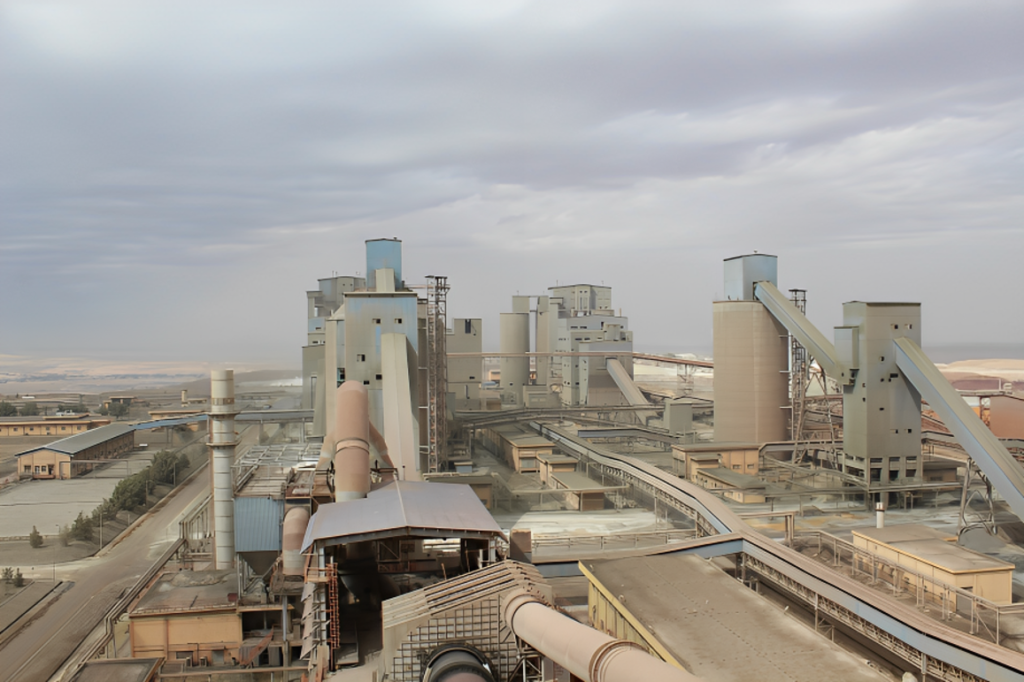
Perhaps the single most telling performance indicator in Riyadh Cement’s transformation is the improvement in Overall Equipment Effectiveness (OEE). The company has moved from an OEE baseline of 85 percent to 98 percent, a shift that places the plant among the top performers in the global cement industry by this measure.
OEE is a rigorous composite metric. It captures availability, performance rate, and quality simultaneously, meaning that an improvement of this magnitude cannot be achieved through optimization in one dimension alone. It requires sustained, system-level improvement across maintenance reliability, production scheduling, quality management, and operational discipline. Reaching 98 percent OEE reflects the full integration of the digital and operational programs described above.
This performance level also has direct strategic implications. A plant operating at near-maximum equipment effectiveness has structurally lower unit costs, greater scheduling flexibility, and a stronger competitive position than peers operating at lower OEE levels.
Recognition and the Path to Global Lighthouse Status
Riyadh Cement’s transformation has received formal recognition from the Ministry of Industry and Mineral Resources as a leading national company in the application of industrial transformation and Fourth Industrial Revolution technologies. This recognition reflects both the ambition and the execution quality of the program.
More significantly, the company is now on a structured pathway toward membership in the Global Lighthouse Network, the World Economic Forum’s curated community of manufacturing facilities that represent the global frontier of Industry 4.0 adoption. Membership in this network would place Riyadh Cement alongside the world’s most advanced industrial facilities and would signal, to international partners and customers, a level of operational and environmental maturity that carries commercial weight.
The company has also achieved seven international ISO certifications, spanning quality, environment, energy, occupational health and safety, asset management, innovation, and information security. This breadth of certification reflects an institutional commitment to management system rigor that supports and sustains the operational improvements described above.
What This Means for the Sector
From FCI’s perspective, Riyadh Cement represents something the regional cement industry needs more of: a fully documented, results-verified case of integrated industrial transformation. The company has demonstrated that it is possible to simultaneously improve production efficiency, reduce energy consumption, lower carbon emissions, and build the digital capability required for continuous future improvement, within the context of an operating cement plant rather than a greenfield project.
The model is transferable. The combination of committed leadership, structured digital roadmap, targeted capital investment in energy recovery, and rigorous performance management is not unique to Riyadh Cement’s circumstances. It is a framework that other producers across the Kingdom and the region can adapt and deploy.
As the cement sector navigates the years ahead, the companies that will lead are those that treat the transition to low-carbon, high-efficiency production not as a compliance exercise but as a source of competitive advantage. Riyadh Cement has made that choice. The results speak for themselves.
Bridging Academia and Industry: A Technical Journey into Sustainable Cement Production plant
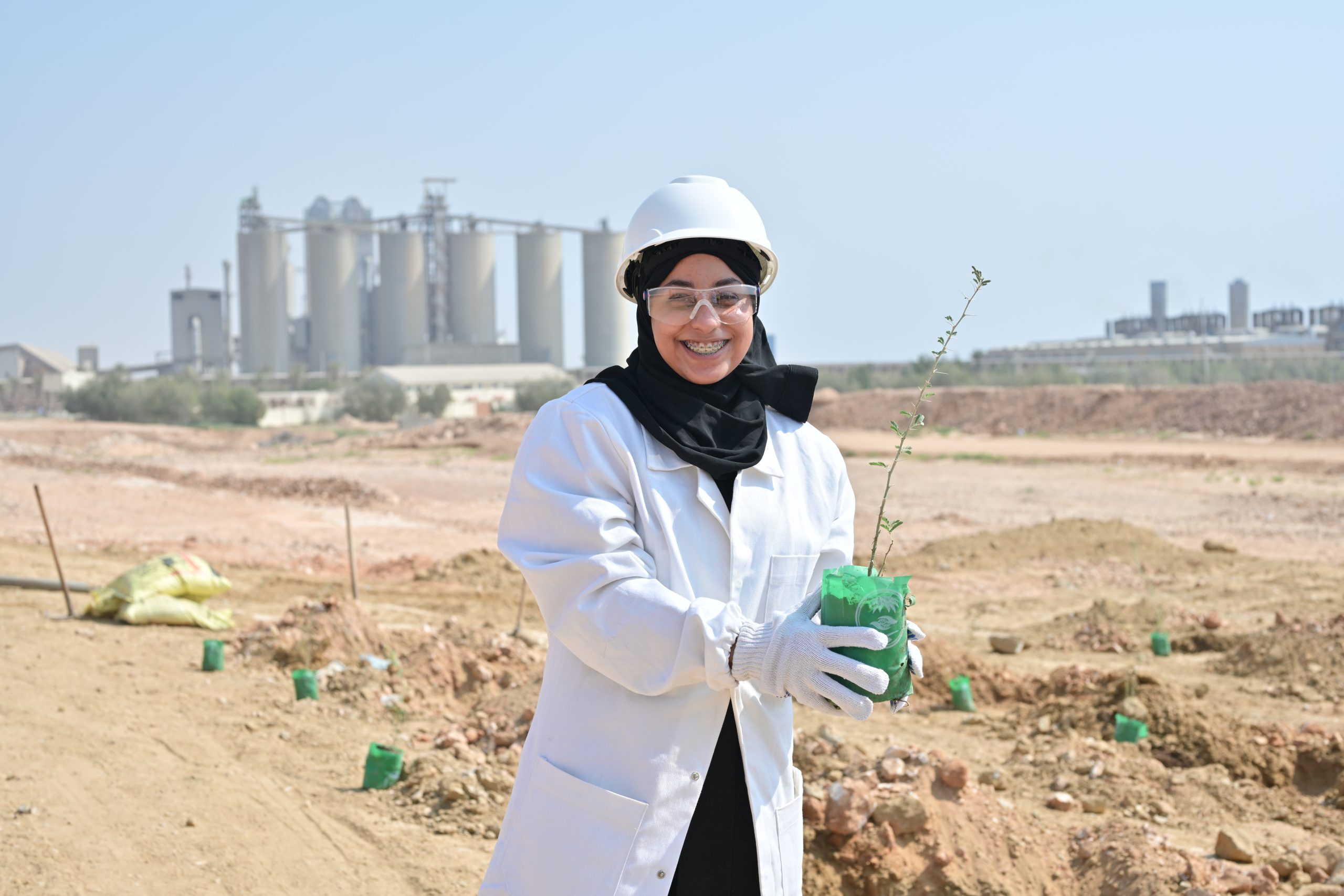
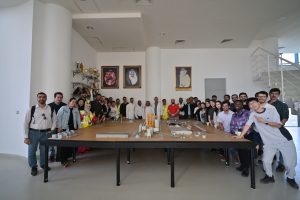
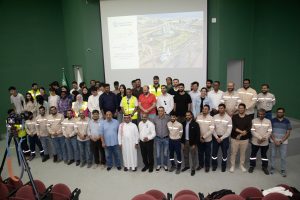
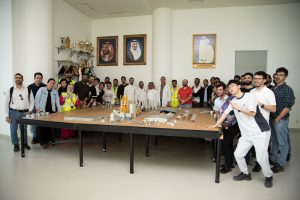
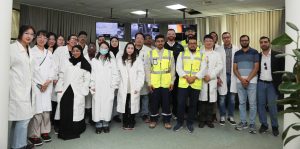
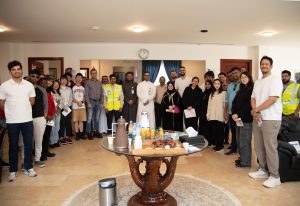
Last week marked a significant milestone in our mission to decarbonize the cement sector. The Future Cement Initiative (FCI), in collaboration with the Clean Energy Research Platform (CERP) at KAUST, conducted a two-day technical field visit to YANBU CEMENT COMPANY , graciously hosted by Dr. Bader Alojaiman , Chief Strategy & Risk Officer, and Eng. Al-Zailaie, Ali , Chief Manufacturing Officer. Their exceptional hospitality and meticulous plant preparation set the stage for a truly productive technical exchange.
MS and PhD students, postdoctoral fellows, research scientists, and professional staff joined this immersive industry engagement experience, witnessing operational excellence firsthand and exploring the complex challenges facing cement manufacturing today.
Setting the Foundation: More Than Technical Exchange
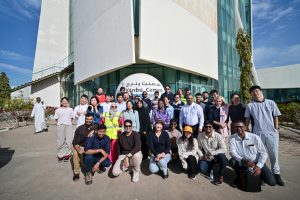
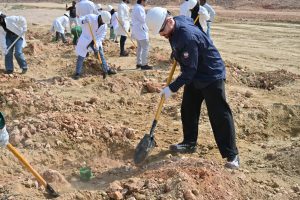
Our visit began with our KAUST research scientists joining the Yanbu cement team in a plantation activity, one of YCC’s contributions to the Green Saudi Initiative. This hands-on participation reinforced the plant’s commitment to environmental stewardship, grounding our technical discussions in the broader context of environmental responsibility.
Inside the Operations: Where Theory Meets Reality
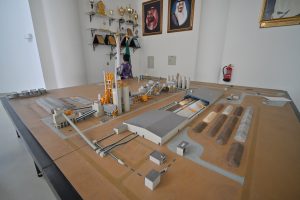
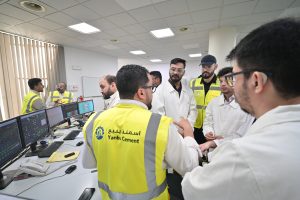
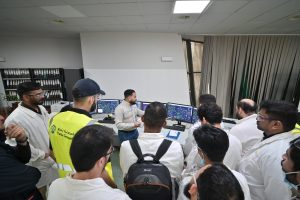
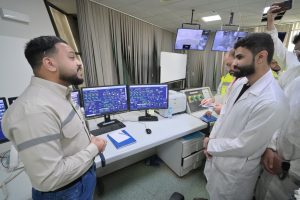
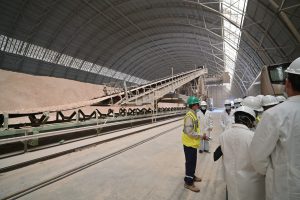
The comprehensive plant tour provided rare access to clinker and cement production lines, Central Control Room operations, Quality Control laboratories, and on-site sustainability initiatives. For many researchers, this was their first exposure to the scale and complexity of industrial cement production. The sophistication of process optimization systems, plant digitalization efforts, and quality assurance protocols offered invaluable insights that no laboratory can fully replicate.
The Decarbonization Challenge: Technical Depth and Honest Dialogue
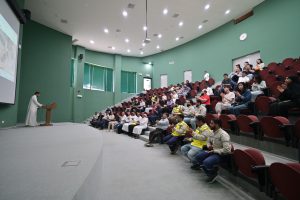
Technical presentations addressed the core challenges facing the industry today: cement manufacturing processes, Waste Heat Recovery (WHR) systems, emissions monitoring, environmental control strategies, and operational challenges including green cement production and bypass system optimization.
Particularly insightful were discussions around carbon capture pathways and innovative concepts for bypass dust treatment. These conversations underscored a critical reality: decarbonization solutions must balance environmental impact reduction with productivity maintenance and economic viability.
Why This Matters
At FCI, we believe meaningful transformation of the cement sector requires direct engagement with operating plants. The cement industry accounts for approximately 8% of global CO2 emissions. Every innovation matters at this scale, but advances can only succeed if they emerge from deep understanding of actual production environments. Bridging academia and industry is essential for developing practical, scalable, and technically robust solutions for low-carbon cement production.
Looking Forward
We extend our sincere gratitude to Yanbu Cement Company for their warm hospitality, operational transparency, and commitment to sustainable innovation. Special thanks to the dedicated plant team who made this visit exceptional: Eng. Saad Al-Alwani , Eng. Abdulaziz Zailaie , Eng. Abdulaziz Alkhathran , Eng. Abdulmohsen Albalawi , Eng. Rayan Alhubayshi , Eng. Mohammed Mohsenah Eng. Mazen Faran, Dr. Ahmed shafeek , Eng.. Niamat Ullah Khan Eng. Mahmoud Elfakhrany , Mr. Majid Abdullah Khan and Mr Ahmad Doom . Your expertise and willingness to share both successes and challenges enriched our understanding immeasurably.
Together, through integrated research-industry collaboration, we move closer to redefining the future of cement, one technical breakthrough, one operational improvement, and one meaningful partnership at a time.