
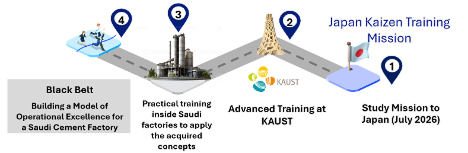
Kaizen Study Mission – Japan

Travel Itinerary

📅 Day 1

Arrival & Welcome – Nagoya
  • Arrival at Nagoya (Chubu) International Airport.
  • Group pick-up and transport to hotel.
  • Hotel check-in from 15:00.
  • Evening at leisure / rest.

📅 Day 2

TPS Dojo – (Nagoya area)

• AM: TPS Dojo training – basics of TPS.
• PM: Hands-on exercises – waste detection, flow, standard work, 5S, safety.
• 18:00: Return to Hotel.

📅 Day 3

Factory Visits – DKS & Avex (Mie area)
  • AM: Visit to DKS Co. Ltd – Yokkaichi Plant.
  • Lunch Break.
  • PM: Visit to Avex Inc. – Tado Plant (Toyota supplier).
  • 18:00: Return to Hotel (Nagoya area).

📅 Day 4

Cement & Concerte Value Chain – Mie & Aichi
  • AM: Visit to Taiheiyo Cement – Mie Prefecture plant.
  • Lunch Break / Transfer to Aichi.
  • PM: Visit to Ready-mix Concrete Company – Aichi Prefecture.
  • Evening: Return to Hotel (Nagoya area).

📅 Day 5

Toyota Way, Genba Visit & Action Planning – Nagoya area
  • AM: Visit to Toyota Technology Museum – origins of TPS.
  • PM: Genba visit – construction site or housing project (Nagoya / Aichi area).
  • Late PM: Reflection & action-planning workshop.
  • 18:00: Return to Hotel.

📅 Day 6

Transfer to Tokyo & Japan Culture Day
  • AM: Check-out Nagoya hotel & transfer to Tokyo (Shinkansen).
  • Late AM–PM: Japan culture experience in Tokyo (example combination).
  • Asakusa & Senso-ji area (traditional downtown, temple, shopping street).
  • Meiji Jingu / Harajuku or Shibuya area (contrast of tradition & modern city).
  • Evening: Free time in Tokyo or group dinner.
  • Overnight in Tokyo.

📅 Day 7

Departure from Tokyo
  • Hotel check-out.
  • Transfer to Tokyo airport (Haneda / Narita) and departure.

Cement plants visits are subject to change upon confirmation.
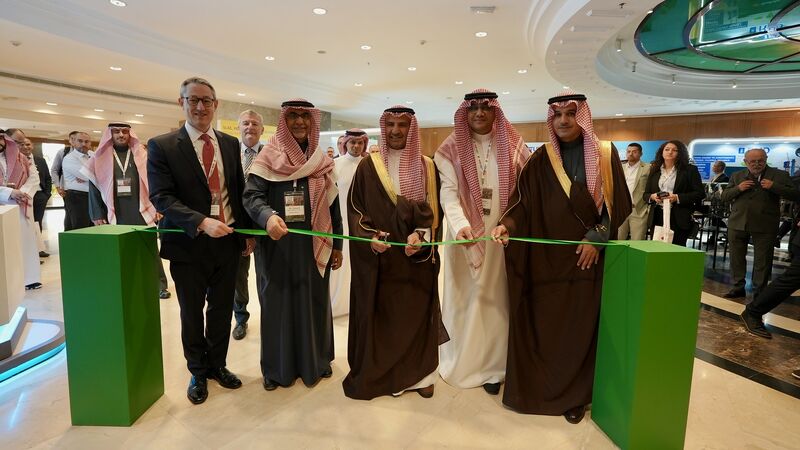
Future Cement Initiative at Cemtech MEA 2026 | Riyadh

At Cemtech MEA 2026, the Future Cement Initiative (FCI) proudly co-hosted a global convening of cement leaders from 35+ countries, united around a defining challenge of our time: transforming the cement sector.

Key moments and insights: Science-Led Strategy

Prof. Bassam Dally presented how FCI’s research at KAUST is advancing next-generation low-carbon cement systems, integrating innovation in engineered and indigenous materials, to directly support Saudi Vision 2030 and Net Zero 2060. Deep engagement with regulators, producers, and FCI Board members reinforced the urgency of scaling science into policy and practice.

Technology at Scale
The exhibition demonstrated deployable solutions across the cement value chain, including carbon capture and utilization, alternative binders and SCMs, AI-enabled process optimization, Industry 4.0 digitalization, and alternative fuels, collectively redefining efficiency, resilience, and emissions intensity.

Industrial Transformation
A technical site visit to Yamama Cement’s 9.285 MTPA integrated plant showcased how large-scale modernization, energy optimization, and process upgrades are reshaping the region’s production landscape.

The MENA region is not reacting to the global energy transition; it is engineering it. Through aligned collaboration between KAUST, PIF, and cement industry partners, FCI remains confident that net-zero cement production in Saudi Arabia can be achieved and replicated globally.


View Photos

Future Cement Initiative Annual Workshop 2025

During the latest Future Cement Initiative decarbonization workshop in December, Dr. Sarathy presented focused on carbon capture pathways for the cement sector. He examined oxyfuel combustion as a route that increases CO₂ concentration in kiln flue gas and improves capture performance. He showed how full and partial oxyfuel systems align with cement kiln chemistry and support high capture rates. He positioned these systems as practical options for industrial decarbonization because they produce concentrated CO₂ streams and reduce separation effort. His analysis placed emphasis on solutions that scale while preserving process integrity.

He also outlined progress from ongoing experimental programs in Europe. These programs demonstrate that oxyfuel conditions enhance CO₂ separation efficiency and simplify downstream purification. Collaborative initiatives such as AC2OCem are refining first‑ and second‑generation oxyfuel designs for retrofit and new‑build cement plants. Their work achieves gains in oxygen integration, calciner operation, and CO₂ avoidance cost. Pilot‑scale validation confirms these improvements. These developments strengthen the relevance of Dr. Sarathy’s research for FCI partners who seek evidence‑based decarbonization pathways grounded in current industrial practice.

View Photos – December 8

View Photos – December 9
