
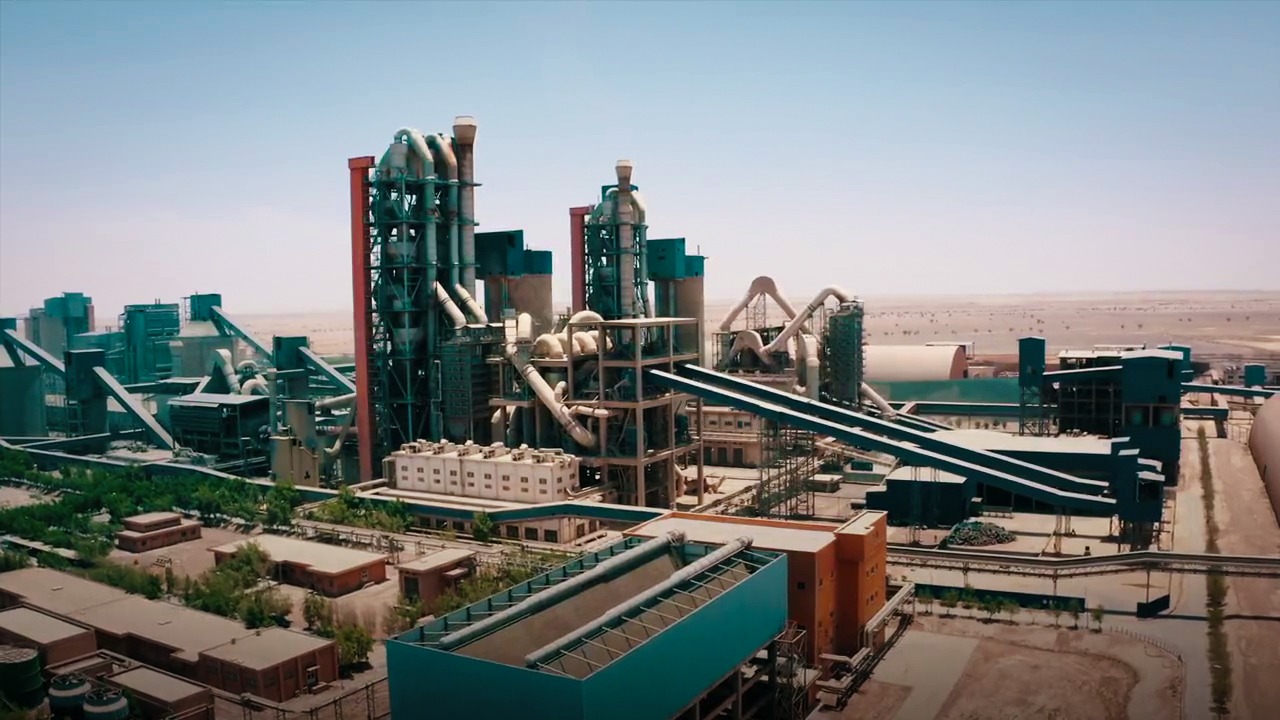
A Company That Decided to Go First
In an industry where the default posture is to wait for regulation before acting, City Cement Company made a different choice. Since its establishment in 2005, the company has consistently moved ahead of the market on sustainability, not because the rules required it, but because its leadership concluded that being early was a source of competitive advantage rather than a cost burden. That posture, sustained across nearly two decades, has produced a body of verified, quantified results that now stands as one of the most comprehensive sustainability records in the Saudi cement sector.
The 2024 performance snapshot captures a company in strong forward motion. Net profit grew 76 percent to SAR 144 million. Revenue reached SAR 521 million. Cement sales rose 31 percent to 2.84 million tons. And yet the financial growth was matched step for step by environmental progress: clinker factor reduced to 89.9 percent, dust emissions cut by 50 percent from the 2021 baseline, total energy efficiency improved 12.6 percent against 2022, and zero waste sent to landfill across the full reporting year. These are not trade-offs. They are outcomes of the same integrated operating model, executed consistently across the full business.
Decarbonization
Attacking the Problem at Its Source
City Cement’s approach to carbon reduction is notable for its willingness to address the hardest part of the cement emissions problem rather than working around it. The dominant share of cement’s CO2 footprint comes from two sources: the fuel used to heat kilns, and the chemical calcination of limestone into clinker. Fuel switching helps with the first. Reducing the clinker factor is the only way to address the second. City Cement has pursued both with equal seriousness.
On the fuel side, the company operates one of the most sophisticated alternative fuel programs in the Kingdom. In 2024, the Marat plant ran on nine alternative fuel types simultaneously, achieving an average thermal substitution rate of approximately 11 percent across both production lines, with Line 2 reaching 11.45 percent. The fuels include refuse-derived fuel (RDF), tire-derived fuel (TDF), spent pot liner from aluminum production, carbon black, and other industrial and agricultural waste streams. Green Solutions for Environmental Services, City Cement’s wholly owned waste management subsidiary, produced 23,304 tons of alternative fuels in 2024, a 6 percent increase from 2023, providing a vertically integrated and cost-competitive supply of fuel inputs that simultaneously diverts waste from landfill.
The company’s longer-term target is a 40 to 45 percent thermal substitution rate, a level that would place it among the most advanced alternative fuel users in global cement manufacturing. The infrastructure to support that trajectory is already being built through the partnership with the Saudi Investment Recycling Company to develop a large-scale RDF facility in Riyadh.
On the clinker side, the company has reduced its clinker factor to 89.9 percent in 2024, down from the 2021 baseline, through a combination of additive optimization, product reformulation, and the commercialization of its Green Finishing Cement. That product contains more than 42 percent supplementary cementitious materials and emits just 579 kg of CO2 equivalent per ton, which is 34 percent less than conventional OPC. In 2025, SCM expansion initiatives saved over 106,450 tons of clinker, with a further 2.92 percent reduction target confirmed for 2026. Looking further ahead, the establishment of Nizak Mining Company and its joint venture with Next Generation SCM and Denmark’s CemGreen to produce calcined clay using modular CemTower technology represents the next structural step: securing a domestic supply of low-carbon clinker substitutes at commercial scale.
The cumulative emissions result: total CO2 per ton of cement has moved from 681 kg in 2021 to 676.9 kg in 2024, with Scope 1 specific intensity (combustion and calcination combined) at 723 kg CO2 per ton of cement and Scope 2 at 67 kg CO2 per ton of cement.
Energy Performance
Numbers That Exceed Their Own Targets
City Cement’s energy efficiency trajectory is one of the clearest quantitative stories in the article series. The company set an internal target of a 4.5 percent reduction in energy intensity by 2026. By 2024, it had already achieved a 12.6 percent improvement against the 2022 baseline, surpassing the 2026 target by nearly three times and with two years still remaining.
The specific power consumption for cement production fell from 125 kWh per ton at baseline to 112.8 kWh per ton in 2024, a 12.72 percent reduction driven by cement mill optimization, improved roller press feeding, and process automation. Thermal energy consumption for clinker production reached 811.8 kcal per kg of clinker, a 2.79 percent improvement from baseline, achieved despite the lower calorific value of alternative fuels relative to conventional heavy fuel oil. That these gains were delivered while increasing alternative fuel substitution reflects the quality of the combustion management and process control at the Marat facility.
The Waste Heat Recovery system generated over 16 megawatts of clean electricity in 2024, providing a meaningful offset to grid electricity demand. Kiln reliability reached 99.7 percent, an improvement of nearly 8 percent from 2021, supported by AI-based monitoring and proactive maintenance programs. Line 2 operated at 379 tons per day above its design capacity, and Cement Mill A exceeded 1 million tons of annual output, both reflecting the productivity gains embedded in the current operational model.
Digital Transformation
The Intelligence Layer
City Cement ranked first nationally in the Smart Industry Readiness Index (SIRI), recognizing its leadership in Industry 4.0 adoption across the Saudi manufacturing sector. That recognition reflects a digital journey that began in 2020 with IT infrastructure modernization and has progressed steadily through ERP implementation in 2022, SIRI certification in 2023, and a suite of advanced digital deployments in 2024.
The Factory White-Box project, which won the Microsoft Intelligent Manufacturing Award (MIMA) 2025 Middle East in the Sustainability Category, delivers deep real-time process visibility across production lines and utilities, translating sensor data into prescriptive insights that operators and managers can act on immediately. The AI-driven Expert Optimizer achieved a 7.35 kWh per ton reduction in power consumption, generating approximately SAR 1.3 million in energy savings in 2025 alone.
The 2024 digital agenda included the launch of a real-time environmental monitoring platform integrating continuous emissions monitoring, air quality sensors, and energy consumption data into a unified knowledge management system. The ZATCA Fatoora integration was completed on schedule, linking the SAP system to the national tax verification platform. The weighbridge system was connected to SAP for synchronized inventory tracking. Quality lab operations were digitized through Phase 1 of the Digital Quality Strategy, including LIMS integration and digital audit traceability, producing a 25 percent reduction in manual documentation time.
Looking ahead, City Cement is preparing to deploy a digital energy management system using machine learning algorithms to optimize consumption patterns, and an automated ESG reporting platform to further accelerate sustainability disclosure. The digital infrastructure is not treated as a support function. It is positioned as a core enabler of the company’s decarbonization and operational excellence agenda, which is precisely the integration that makes SIRI rankings meaningful.
Operational Excellence
Discipline Behind the Numbers
The production data from 2024 reflects an operation being pushed toward its performance limits with careful engineering discipline. Clinker output was 2,443,619 tons. The bypass dust recycling program recovered approximately 120 tons per day and reintegrated it into production, contributing to the zero waste to landfill performance achieved across the full year. 100 percent of solid waste was treated through approved channels.
Maintenance transformation continued in 2024 with the establishment of a centralized preventive maintenance team, the launch of condition-based monitoring across critical assets, and SAP integration for digital maintenance planning. Blue-collar workforce skills and utilization improved by 28 percent through a structured upskilling program. Kiln Line 2 achieved an OEE improvement from 58 percent at baseline to 106 percent in 2024 and a Mean Time Between Failures improvement of 612 percent, the result of successful total productive maintenance deployment. Quality external non-conformities fell 25 percent, complaint resolution time dropped 20 percent to 8 days, and the unresolved customer complaint rate reached zero percent.
The supply chain function underwent a parallel transformation, with local procurement representing 76 percent of total spending, procurement from local suppliers exceeding SAR 150 million, and warehouse inventory value reduced by 39 percent through consolidation and digital tracking. Zero contract terminations related to corruption or non-compliance were recorded.
Transparency as an Institutional Commitment
City Cement published its second annual sustainability report in 2024, prepared in accordance with GRI Standards 2021 and the IIRC Integrated Reporting Framework, with third-party limited assurance provided by DCarbon Global. The company was the first cement producer in Saudi Arabia to obtain Environmental Product Declarations for all three primary products, OPC, SRC, and Green Finishing Cement, verified under ISO 14025 and registered with the International EPD System with validity through 2028.
The governance framework that supports these disclosures is structured and active. The Board of Directors held six meetings in 2024 with high attendance. The Sustainability Committee, operating under direct Board authority, oversees ESG integration, KPI monitoring, and regulatory compliance across all sustainability dimensions. The Audit Committee’s responsibilities explicitly include ESG risk review alongside financial oversight. Zero regulatory complaints, zero confirmed corruption incidents, zero monetary fines, and zero customer privacy violations were recorded in 2024.
On the social side, 435 employees received a total of 1,629 training hours. Lost-time injury rate was reduced by 41 percent. Recordable accidents fell by 20 percent. Zero work-related fatalities or ill-health incidents were recorded. Female participation in the workforce rose from 1.4 percent in 2023 to 3.5 percent in 2024, with female hiring under 30 years old increasing 160 percent. Community investment reached SAR 1.3 million across health, community development, culture, heritage, education, and sports programs, including disability empowerment programs benefiting over 3,000 children in Marat Governorate.
What This Means for the Sector
From FCI’s perspective, City Cement’s 2024 sustainability report represents the most comprehensively documented sustainability performance in the Saudi cement sector to date. The data is specific, third-party assured, and organized against internationally recognized reporting frameworks. The performance covers the full value chain: from raw material sourcing and alternative fuel production through manufacturing, logistics, and community impact.
More importantly, the trajectory is consistent and accelerating. City Cement is not reporting a single breakthrough year. It is reporting the cumulative output of a strategy that has been executed with disciplined continuity since at least 2017, when alternative fuel utilization stood at 2.74 percent. That consistency is what makes the results credible and the model instructive.
The company’s CEO Majed Al-Osailan sits on the Future Cement Initiative’s leadership, and City Cement’s experience is directly informing the standards, frameworks, and policy recommendations that the FCI is developing for the sector as a whole. The work being done at the Marat plant is not just a company story. It is becoming the reference point against which the rest of the Saudi cement industry’s transition will be measured.