Al Jouf Cement Company

Scientific Innovation, Renewable Energy, and a NEOM Stamp of Approval

The Science of Green Cement

How Pozzolana Replaces Clinker

Understanding why AJCC’s green cement program is technically significant requires understanding the chemistry it is built on. Clinker production is the most carbon-intensive stage of cement manufacturing, because the calcination of limestone at temperatures exceeding 1,400 degrees Celsius releases CO2 as an unavoidable process emission, regardless of the fuel used to generate the heat. Every ton of clinker replaced by a supplementary cementitious material eliminates the corresponding process emissions entirely, not merely reduces them.

Natural pozzolana is a siliceous or siliceous-aluminous volcanic material that reacts chemically with calcium hydroxide, the by-product of Portland cement hydration, to form additional calcium silicate hydrate (C-S-H). This secondary pozzolanic reaction does not generate heat, which reduces the heat of hydration in large concrete pours. It densifies the cement paste microstructure, reducing permeability and improving resistance to sulfate attack, chloride ingress, and alkali-silica reaction. The concrete produced from pozzolanic cement performs better over its full service life than OPC concrete in aggressive environments, making it not just more sustainable but technically superior for demanding applications.

AJCC’s local black pozzolana achieves a combined SiO2 plus Al2O3 plus Fe2O3 content of 71.93 percent, above the minimum 70 percent threshold specified by international standards. Its fineness at 45 micrometers is 1.8 percent, far below the 34 percent maximum. The Strength Activity Index, the standard measure of pozzolanic reactivity, reaches 92.9 at 7 days and 93.2 at 28 days against a minimum requirement of 75 at both ages. Water requirement is 102 percent against a maximum of 115 percent. These are not marginal compliance figures. They represent a high-reactivity pozzolana that performs at the upper end of what is available commercially anywhere in the world.
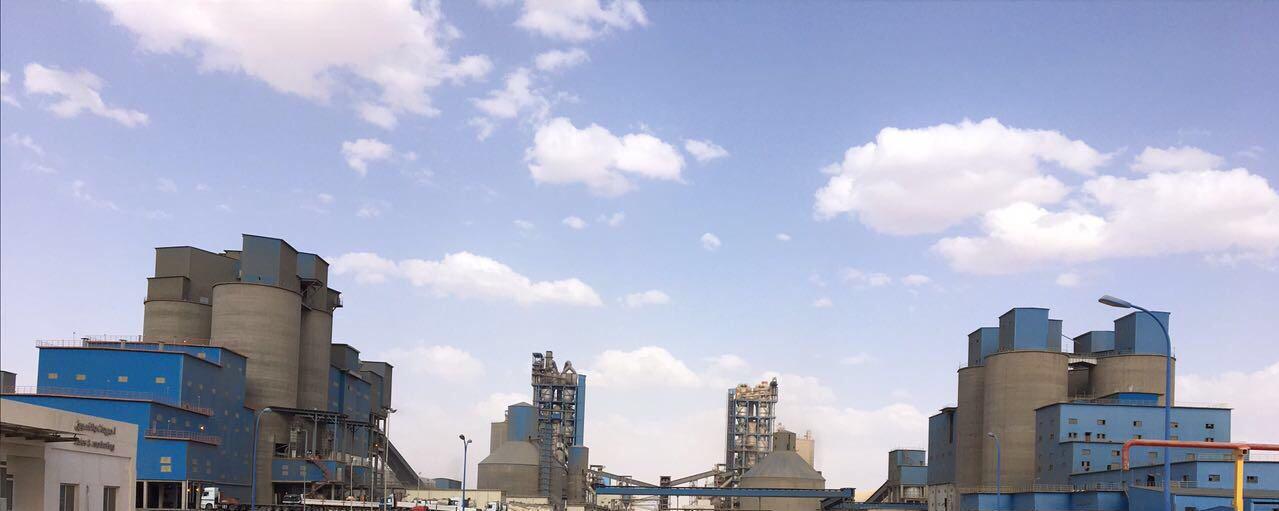
Green Cement

CEM II/B-P 42.5R at 30 Percent Clinker Replacement

AJCC’s Green Cement is classified as CEM II/B-P 42.5R under European standard EN 197-1 and Type IP-30 under ASTM C595, with a pozzolana substitution rate of approximately 30 percent in both the Green Cement and Super-20 product lines. The 42.5R designation is significant because the R indicates rapid early strength: the cement achieves 2-day compressive strength of approximately 27 MPa, exceeding the international standard minimum of 20 MPa by a meaningful margin.

This early strength performance at 30 percent clinker replacement is not automatic. It requires careful engineering of three interdependent variables. First, AJCC uses high-reactivity OPC clinker specifically selected to compensate for the dilution effect of the pozzolana substitution, ensuring that the initial hydration reaction produces sufficient calcium hydroxide to drive the pozzolanic reaction at the rate required for early strength development. Second, advanced grinding technology controls the fineness of both the clinker and pozzolana components to optimize particle size distribution and surface area for reaction kinetics. Third, the mix design balances the blending ratios in real time using the QCX automated quality control system in the production laboratory.

The carbon performance of the product has been quantified through a full Life Cycle Assessment (LCA) and certified by an independently verified Environmental Product Declaration (EPD). The EPD data shows that AJCC OPC emits 907 kg CO2 equivalent per ton of cement, while Green Cement emits 680 kg CO2 equivalent per ton, a reduction of 25 percent. At the clinker level, the reduction achieves approximately 0.30 tons of CO2 per ton of clinker replaced, consistent with global industry benchmarks for natural pozzolana substitution. AJCC has obtained EPD certifications for multiple products including OPC and Super-20 Cement, registered through the SCS Global Services international platform.

NEOM Approval

The Ultimate Market Validation

The commercial validation of AJCC’s Green Cement program came in a form that carries more weight than any certification or award: approval for use in the NEOM megaproject, including The Line, confirmed through AJCC’s collaboration with Almohelib Group (Asas Al-Muhailb Company). NEOM applies some of the most stringent quality, sustainability, and technical performance requirements for construction materials of any project currently under development anywhere in the world. Approval for use in that project confirms that AJCC’s green cement meets international performance standards at commercial scale.

The path to NEOM approval was not a procurement shortcut. It began with intensive R&D at AJCC’s laboratory, responding to a specific technical brief from the contractor. The team developed the target product formulation, validated the chemistry, conducted concrete mix design trials meeting the project’s specific structural and durability requirements, and submitted the full technical dossier for approval. The process demonstrates the depth of technical capability that AJCC has built around its pozzolana-based product line, and the confidence with which that capability can be deployed in response to demanding customer requirements.

The 22 MWp Solar Partnership with ENGIE

Decarbonizing the Energy Side

Green cement addresses the process emissions side of AJCC’s carbon footprint. The recently signed 25-year Power Purchase Agreement with ENGIE for a 22 MWp solar photovoltaic plant addresses the Scope 2 electrical emissions side. The project was announced at a ceremony at the Turaif plant attended by HH Prince Faisal Bin Sultan Al Saud, Prince of the Northern Borders region, reflecting the national significance of the investment.

The solar installation spans over 420,000 square meters at the Turaif facility, providing on-site power generation designed specifically for the cement plant’s load profile and operating pattern. ENGIE manages all aspects of design, construction, ownership, operation, and maintenance under a fully integrated PPA structure, meaning AJCC purchases the electricity output at a fixed rate over the full 25-year term without capital outlay for the system itself. This structure transfers technology and performance risk to ENGIE while giving AJCC predictable long-term energy cost certainty and immediate access to clean power.

The lifetime CO2 reduction attributable to the solar project is estimated at 1,481,100 tons over the 25-year contract period, averaging approximately 59,244 tons per year. Combined with the clinker substitution reductions from the Green Cement program, the solar partnership represents a material and permanent shift in AJCC’s total carbon profile. It is worth noting that AJCC’s location in the Northern Borders Province, one of the highest solar irradiation regions in Saudi Arabia, makes photovoltaic generation particularly favorable in terms of capacity factor and annual energy yield.

Digital Transformation

A Clear Baseline and a Defined Roadmap

The SIRI assessment conducted in March 2023 places AJCC at a different point in its digital transformation journey than several other companies in this series. The assessment produced 0 dimensions in the bottom performers range, 10 in the broad middle range, and 6 at Best-in-Class level globally. Three connectivity dimensions, Shop Floor, Enterprise, and Facility, scored best-in-class at Band 4 or Band 5, reflecting the quality of the Siemens PCS 7 DCS infrastructure and the SAP enterprise system implementation. Shop Floor Automation achieved Band 4 (Flexible), consistent with a fully DCS-controlled production process. Inter- and Intra-Company Collaboration achieved Band 4 (Collaborating), reflecting the cross-functional team structures and project management capability the company has built.

The dimensions identified as highest-priority for transformation investment are Vertical Integration, Horizontal Integration, Enterprise Intelligence, and Strategy and Governance. These priorities translate into a specific development agenda: automating the connection between SAP production planning and the DCS shop floor layer, moving from manual Excel-based materials requirement planning to SAP MRP-driven procurement, deploying online real-time dashboards for enterprise process performance rather than post-hoc Excel-exported reports, and building the formal Industry 4.0 transformation roadmap that Strategy and Governance at Band 1 indicates is still in its early stages.

The assessor’s comment is precise: the DCS controls 90 percent of shopfloor equipment and 75 percent of utilities using scalable, platform-independent protocols including OPC UA and ODBC, creating strong connectivity infrastructure that is ready to support the next level of integration. The SAP FICO, PP, MM, PM, SD, QM, and HCM modules are implemented and operating, with real-time data access from operator terminals and mobile applications. The foundation is solid. The development priority is building the intelligence and integration layers on top of it, specifically the MES-level integration connecting OT data to enterprise planning and the enterprise analytics capability that turns that integrated data into operational decisions.

The tactical planning horizon selected for the assessment reflects a company that is building the fundamentals before committing to a long-range digital roadmap, which is the right sequencing. A company that has not yet completed vertical integration should not be optimizing supply chain digital twins. AJCC’s approach of establishing a clear baseline, identifying the highest-value next steps, and building systematically is the correct model for this stage of transformation.