Northern Region Cement Company

Innovation, Green Products, and Digital Intelligence from Saudi Arabia’s North

Green Product Innovation: Three Pathways to Lower Carbon

The most technically substantive dimension of NRC’s sustainability agenda is its development of multiple low-carbon cement product lines, each targeting a different substitution chemistry and end-use application. This product diversification strategy is significant because different construction applications have different performance requirements, and a company that can offer verified low-carbon options across a range of technical specifications has a broader commercial opportunity than one that offers a single green product.

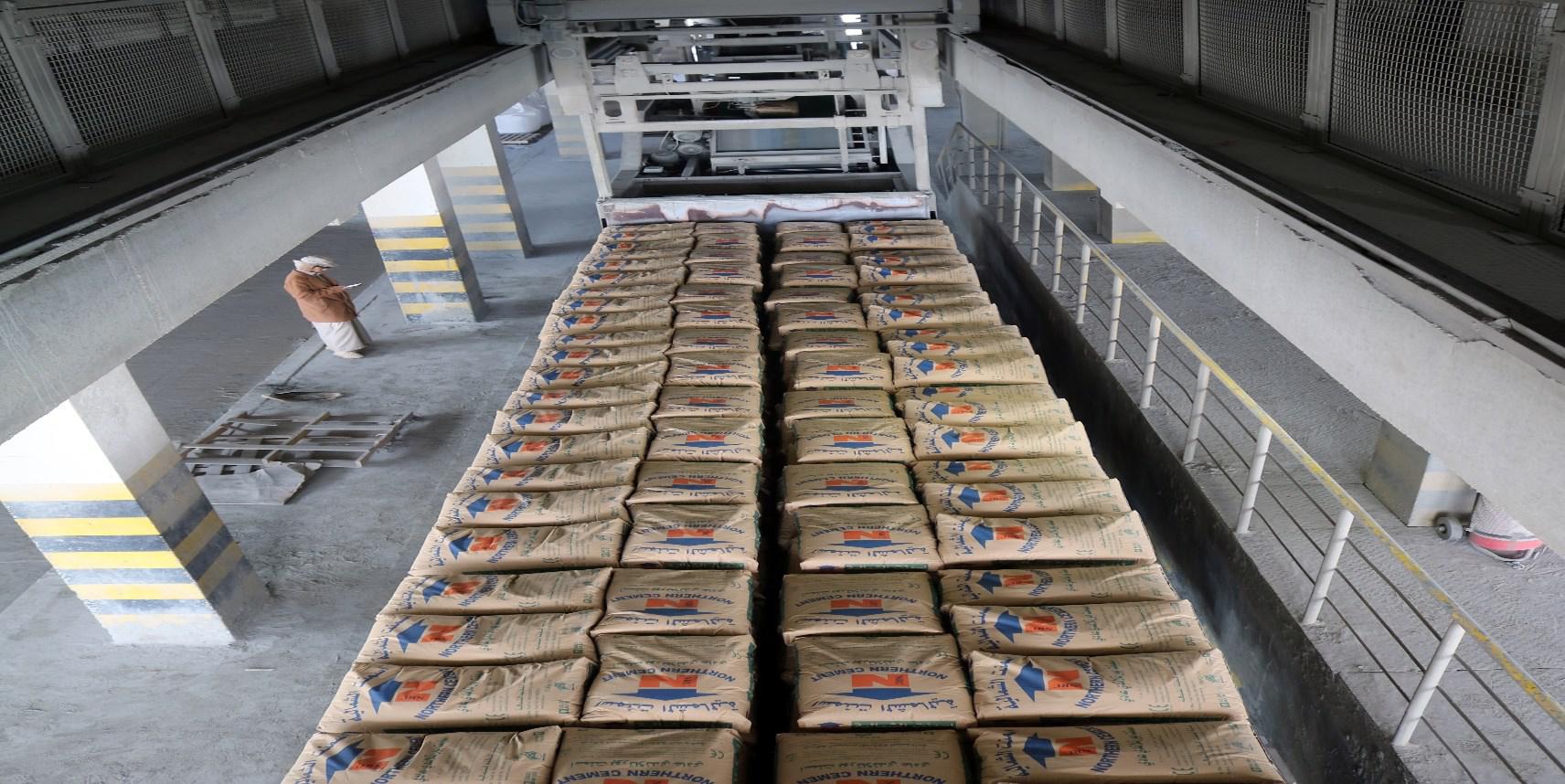
The first pathway is Pozzolanic Portland Cement (PPC), where NRC incorporates natural pozzolanic materials as a partial clinker substitute at substitution rates reaching 35 percent. PPC is characterized by low permeability, high durability, and resistance to sulfates and chlorides, making it the preferred specification for foundations, sewage storage tanks, and marine and saltwater applications. It produces high-durability, long-life concrete while generating meaningfully lower CO2 intensity than OPC, and it carries Saudi quality certification. From an environmental perspective, using one ton of pozzolan as a clinker substitute reduces approximately 350 kilograms of CO2 per ton of cement produced while simultaneously improving concrete performance in aggressive environments.

The second pathway is LC3 cement (Limestone Calcined Clay Cement), where a mixture of calcined clay and limestone is used as a partial clinker substitute with substitution rates reaching 50 percent. LC3 targets a CO2 reduction of up to 40 percent compared to conventional Portland cement, placing it among the most aggressive decarbonization technologies currently available in the sector. NRC’s LC3 product meets the performance requirements of Cem II/B LL 32.5 N standard, with compressive strength and durability comparable to or better than conventional equivalent products. The ability to offer LC3 at commercial scale reflects genuine process and quality management capability, since the consistency of calcined clay chemistry requires precise control of raw material sourcing and processing conditions.

The third pathway is white limestone cement (Cem II/B LL 35.5), which uses limestone as a partial clinker substitute at rates reaching 35 percent. The bright white color of this product makes it ideal for finishing, decorative, and aesthetic applications where appearance is a primary specification requirement. It combines high quality, strength, and stability with an eco-friendly and economical production profile, targeting a segment of the construction market that has historically had very limited access to lower-carbon options.

Reinforcing these product innovations is a proprietary technology achievement: NRC holds Patent SA10181, awarded by the Saudi Authority for Intellectual Property in June 2022, for the conversion of the white cement production line from black to white cement. This patent reflects NRC’s technical depth in white cement manufacturing, specifically the engineering of a production line capable of switching between black and white clinker production, which requires precise chemistry control, specialized kiln management, and advanced quality monitoring to achieve the whiteness index required for certified white cement products.
Process Engineering: Kiln Jacket Heat Recovery

One of the more creative process engineering innovations documented in NRC’s success stories is the Kiln Jacket Heat Recovery system. The concept involves drawing hot air from the kiln jacket, the space between the kiln shell and the outer casing in the combustion zone, where temperatures in normal operation reach 135 degrees Celsius during white clinker production. This captured thermal energy, which would otherwise be dissipated as waste heat, is redirected as pre-heated combustion air into the kiln firing system.

The practical impact is measurable. By using hot air at 135 degrees Celsius rather than ambient combustion air at approximately 40 degrees Celsius, the kiln requires less heavy fuel oil (HFO) to reach and maintain the combustion temperatures required for clinker formation. The calculated saving based on the thermal energy provided per operating day translates to approximately 186 grams of HFO per kilowatt-hour of equivalent thermal energy, reducing both fuel cost and the CO2 and NOx emissions associated with HFO combustion. For a white cement kiln operating continuously, this is a meaningful improvement in both the economic and environmental profile of production.

The innovation demonstrates an important principle: in cement manufacturing, significant efficiency and emissions improvements are often available through intelligent engineering of existing equipment rather than wholesale replacement of production lines. NRC’s kiln jacket heat recovery is exactly this kind of solution, engineering a productive use out of an energy stream that was previously lost.

Digital Transformation

SAP, SIMATIC, and Remote Monitoring

NRC’s digital transformation program is structured around three interconnected layers: enterprise resource planning, industrial automation, and remote equipment monitoring, each addressing a distinct dimension of the production management challenge.

At the enterprise layer, NRC has implemented SAP cloud solutions including SAP Ariba for procurement and supply chain management. The SAP Ariba deployment automates the full procure-to-pay cycle, from purchase requisitions through to payment, connecting the company digitally with suppliers through the SAP Business Network. The specific capabilities deployed include automated sourcing with AI-assisted supplier identification and evaluation, contract management with electronic approval workflows, and full spend transparency from purchase order to payment confirmation. The implementation includes direct bank integration, enabling automated payment processing and reducing manual financial reconciliation work. This procurement digitization reduces costs through better spend visibility, improves supplier risk management through structured contract governance, and provides the data foundation required for local content tracking and reporting.

At the industrial automation layer, NRC has deployed Siemens SIMATIC TIA Portal, a globally leading industrial automation platform that provides integrated control of production equipment through programmable logic controllers (PLCs), advanced HMI screens for process monitoring, and real-time transmission of monitored data including pressure, temperature, gas flows, and emissions rates at high speed. This system provides the operational technology backbone for intelligent kiln and mill management, enabling faster process corrections and supporting the measurement and verification requirements of the SEEC energy efficiency framework.

At the equipment monitoring layer, NRC has built a remote monitoring system covering all production equipment at the plant, providing responsible personnel with real-time visibility into machine status, shutdown events, the causes of those shutdowns, and automatic alerts when monitored parameters deviate from pre-defined normal ranges. This system enables the predictive maintenance strategies that reduce unplanned downtime, extend equipment life, and improve production continuity. When combined with the Spectra Flow analytics system, which provides real-time chemical analysis of incoming raw materials and automatic adjustment of raw mix proportions to maintain target LSF, SM, and AM chemistry parameters at the mill outlet, the monitoring infrastructure creates a closed-loop quality control system that reduces kiln stoppages, improves clinker consistency, and raises cement quality simultaneously.

Renewable Energy

The 20 MW Solar Commitment

NRC awarded an SAR 32.63 million (USD 8.7 million) Engineering, Procurement, and Construction contract to Sinoma for the development of a 20 megawatt solar photovoltaic power plant at its facility. Sinoma’s scope covers full engineering, procurement, delivery, installation, civil works, trial operation, and commissioning.

A 20 MW solar plant at an industrial facility of NRC’s scale represents a material contribution to its Scope 2 emissions reduction agenda. The northern region of Saudi Arabia receives strong solar irradiation throughout the year, making photovoltaic generation particularly well-suited to the location. The clean electricity generated will directly offset grid electricity consumption at the plant, reducing the CO2 intensity of the electrical energy input to production and lowering operating costs per ton of cement. Combined with the thermal efficiency improvements from the Kiln Jacket Heat Recovery system and the process optimization enabled by the SIMATIC and Spectra Flow systems, the solar investment contributes to a structurally lower energy cost and emissions profile.

What This Means for the Sector

From FCI’s perspective, NRC’s sustainability story has a specific characteristic that makes it particularly valuable as a sector reference: the breadth of simultaneous innovation across product design, process engineering, digital systems, and renewable energy. Most companies in the sector lead with one or two of these dimensions. NRC is working on all four together, which means the interactions between them are being explored in practice rather than in theory.

The patent for white-to-black clinker line conversion, the LC3 product development, the kiln jacket heat recovery, the SAP Ariba and SIMATIC deployments, and the solar investment are not isolated initiatives. They are components of a coherent industrial strategy that treats NRC’s northern location, its dual grey and white cement production capability, and its digital infrastructure as complementary assets in a sustainable, competitive operating model.

The SEEC compliance record confirms that the strategy is delivering measurable energy efficiency results today. The investments under execution confirm that the trajectory points toward deeper improvement in the cycles ahead.