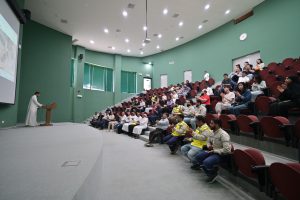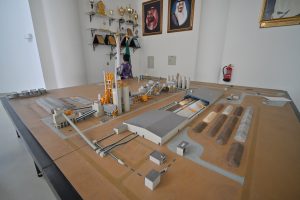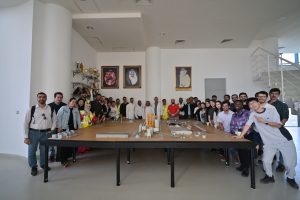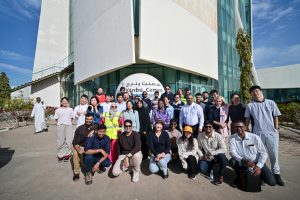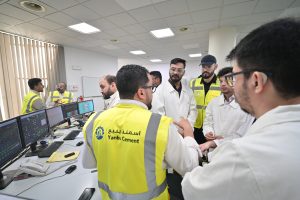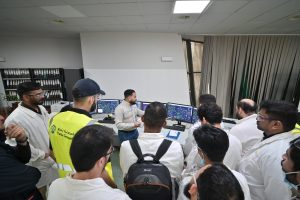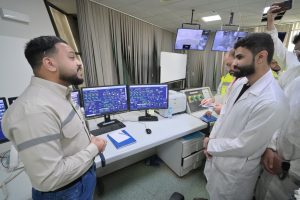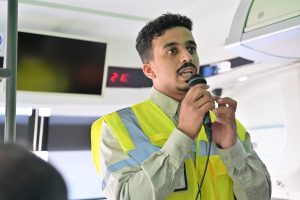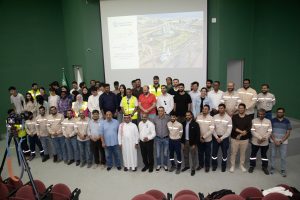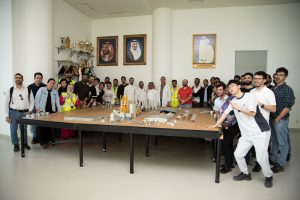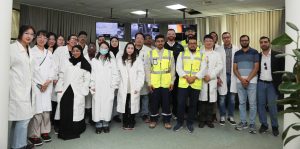
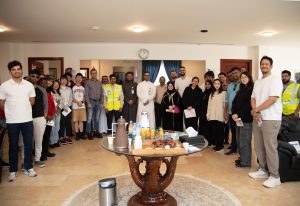
Last week marked a significant milestone in our mission to decarbonize the cement sector. The Future Cement Initiative (FCI), in collaboration with the Clean Energy Research Platform (CERP) at KAUST, conducted a two-day technical field visit to YANBU CEMENT COMPANY , graciously hosted by Dr. Bader Alojaiman , Chief Strategy & Risk Officer, and Eng. Al-Zailaie, Ali , Chief Manufacturing Officer. Their exceptional hospitality and meticulous plant preparation set the stage for a truly productive technical exchange.
MS and PhD students, postdoctoral fellows, research scientists, and professional staff joined this immersive industry engagement experience, witnessing operational excellence firsthand and exploring the complex challenges facing cement manufacturing today.
Setting the Foundation: More Than Technical Exchange
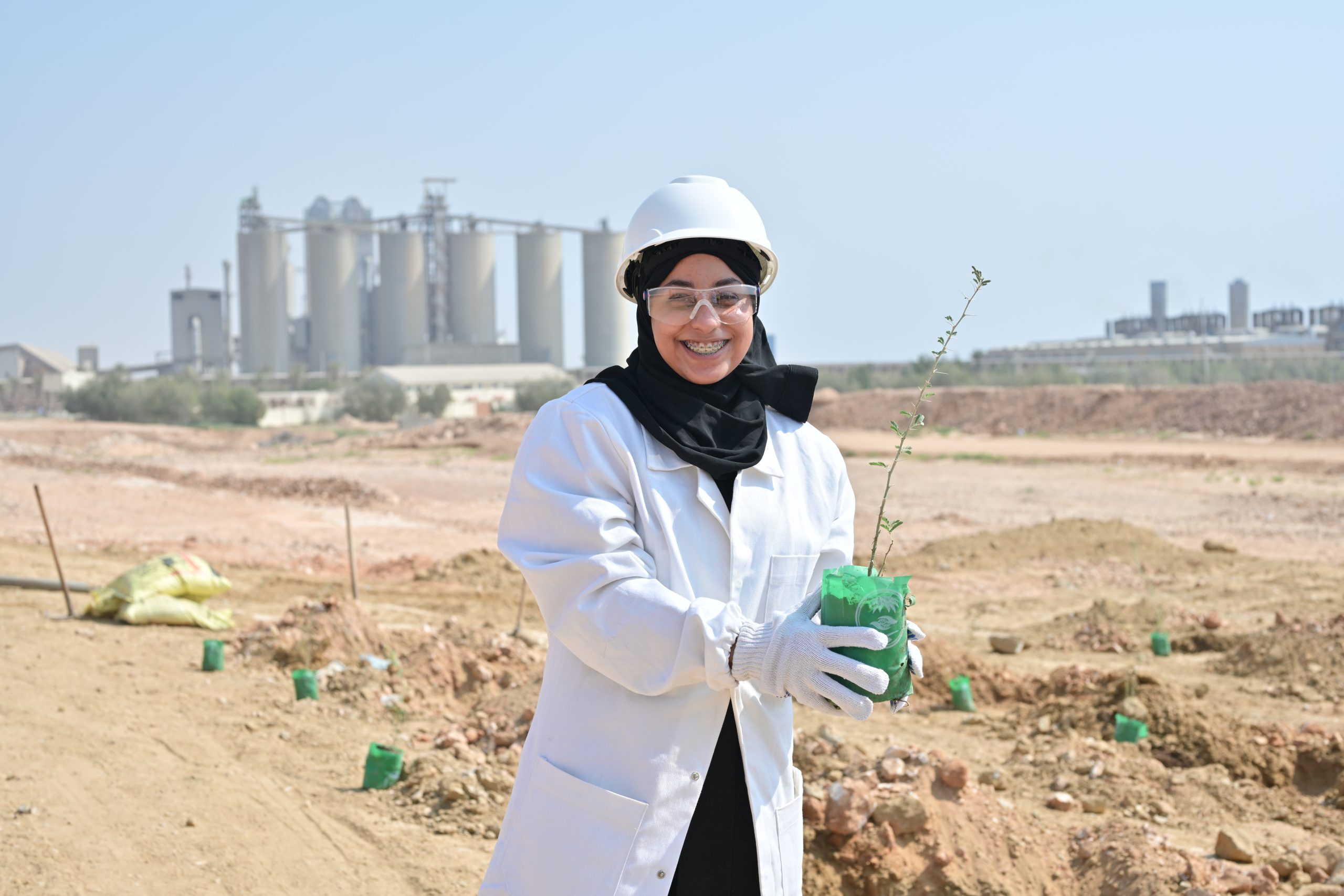
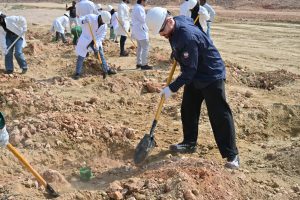
Our visit began with our KAUST research scientists joining the Yanbu cement team in a plantation activity, one of YCC’s contributions to the Green Saudi Initiative. This hands-on participation reinforced the plant’s commitment to environmental stewardship, grounding our technical discussions in the broader context of environmental responsibility.
Inside the Operations: Where Theory Meets Reality
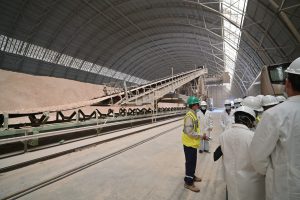
The comprehensive plant tour provided rare access to clinker and cement production lines, Central Control Room operations, Quality Control laboratories, and on-site sustainability initiatives. For many researchers, this was their first exposure to the scale and complexity of industrial cement production. The sophistication of process optimization systems, plant digitalization efforts, and quality assurance protocols offered invaluable insights that no laboratory can fully replicate.
The Decarbonization Challenge: Technical Depth and Honest Dialogue
Technical presentations addressed the core challenges facing the industry today: cement manufacturing processes, Waste Heat Recovery (WHR) systems, emissions monitoring, environmental control strategies, and operational challenges including green cement production and bypass system optimization.
Particularly insightful were discussions around carbon capture pathways and innovative concepts for bypass dust treatment. These conversations underscored a critical reality: decarbonization solutions must balance environmental impact reduction with productivity maintenance and economic viability.
Why This Matters
At FCI, we believe meaningful transformation of the cement sector requires direct engagement with operating plants. The cement industry accounts for approximately 8% of global CO2 emissions. Every innovation matters at this scale, but advances can only succeed if they emerge from deep understanding of actual production environments. Bridging academia and industry is essential for developing practical, scalable, and technically robust solutions for low-carbon cement production.
Looking Forward
We extend our sincere gratitude to Yanbu Cement Company for their warm hospitality, operational transparency, and commitment to sustainable innovation. Special thanks to the dedicated plant team who made this visit exceptional: Eng. Saad Al-Alwani , Eng. Abdulaziz Zailaie , Eng. Abdulaziz Alkhathran , Eng. Abdulmohsen Albalawi , Eng. Rayan Alhubayshi , Eng. Mohammed Mohsenah Eng. Mazen Faran, Dr. Ahmed shafeek , Eng.. Niamat Ullah Khan Eng. Mahmoud Elfakhrany , Mr. Majid Abdullah Khan and Mr Ahmad Doom . Your expertise and willingness to share both successes and challenges enriched our understanding immeasurably.
Together, through integrated research-industry collaboration, we move closer to redefining the future of cement, one technical breakthrough, one operational improvement, and one meaningful partnership at a time.